安川认证机器人操作员 - MHJF Robot Operator Certification
77-5010-0010ZH

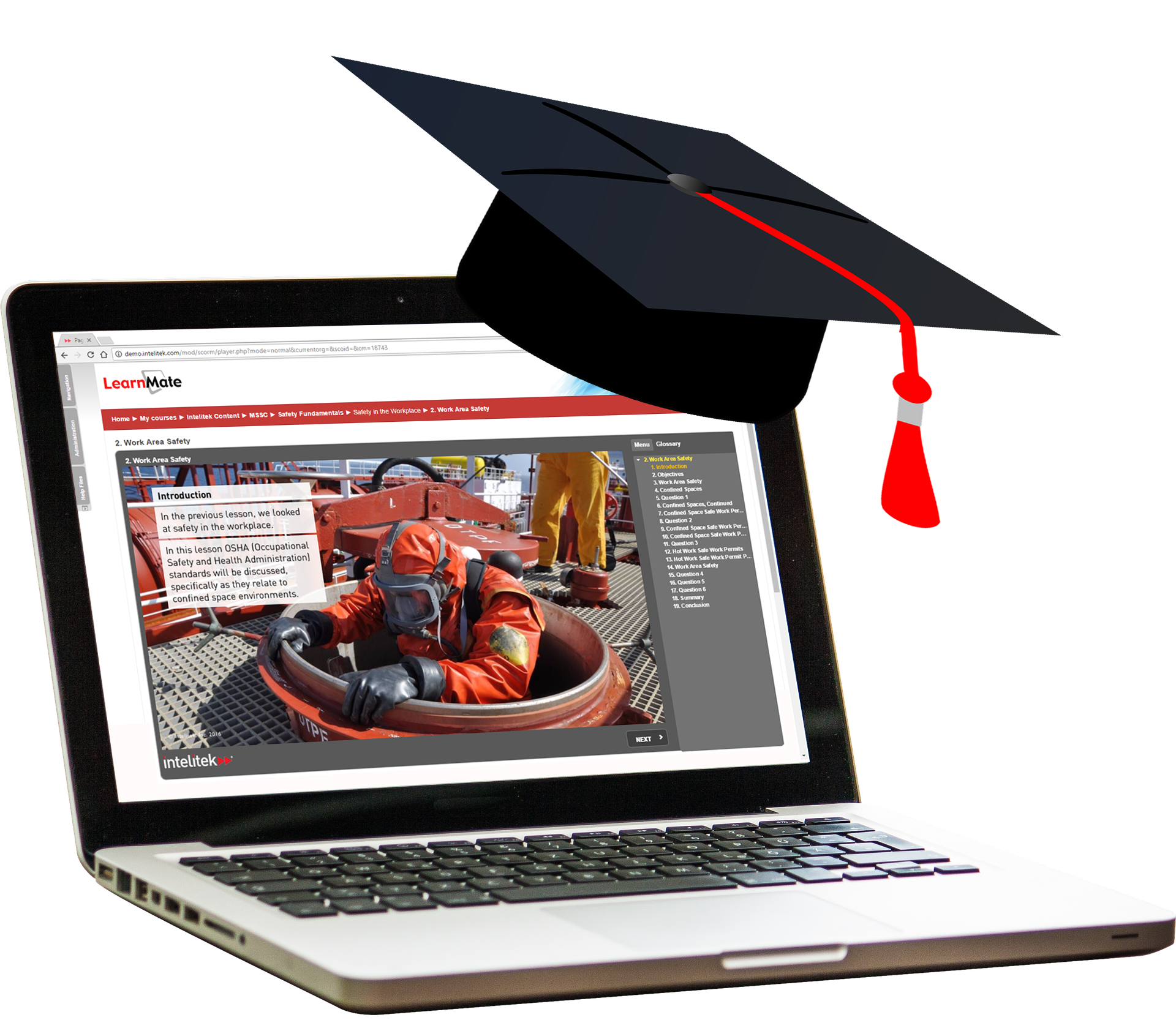
As new classroom practices and learning technologies arise, Intelitek adapts and embraces new ways of teaching the skills that are most relevant to today’s world. Intelitek courses and certification training are the key to unlocking the full potential of any STEM or CTE educational initiative.
Intelitek Academy online courses and certification preparation leverage our 30-plus years in hands-on, project-based learning, providing you with the flexibility to complete your coursework when and where to fit your schedule. Course material is always accessible online 24/7—be it videos, animated material, podcasts or reading materials. All course purchases include a 12-month license with unlimited access during that period.
77-5010-0010ZH
77-5010-0020ZH
The Fundamentals of Robotics course exposes participants to the essentials of robotics theory and certifies them for the operation of the MHJF robotic arm and FS100 controller.
Throughout the course, students learn how to perform skills such as manipulating the robot, creating basic motion programs, resolving errors, defining coordinate systems, outlining interference areas and programming and interacting with the RoboCell robotic simulation software. Most of the course content is presented in the form of classroom activities (referred to simply as “activities”) and laboratory activities (“lab activities”). Both of these terms will be defined in the sections below.
The course concludes with a practical exam, which the students must pass to obtain Motoman Operator Certification. Candidates that successfully complete the practical exam are then eligible to take the final certification exam, which is a test composed of 40 multiple choice questions about the Motoman system and robotic theory.
For students who have completed the Fundamentals of Robotics module, the Advanced Robotic Programming module offers the opportunity to further explore robotic programming. Using RoboCell, the same 3D-solid modeling robotic simulation software that the student has previously used, Advanced Robotic Programming gives the students a greater understanding of the robotics concepts and programming commands they have already learned, as well as the ability to extend that knowledge to gain a greater understanding of robot capabilities, of working with and manipulating a robot, and accomplishing various tasks while focusing both on the goal as well as programming skills and program efficiency.
This module gives students the advanced skills needed to operate, maintain, program and test robotic systems. The activities challenge students to design solutions for industrial robotic applications, with an emphasis on real industrial concerns, such as recording accurate positions, optimizing programming and increasing productivity.
Yaskawa YRC Programmer Certification Exam
For students who have completed the Fundamentals of Robotics module, the Advanced Robotic Programming module offers the opportunity to further explore robotic programming. Using RoboCell, the same 3D-solid modeling robotic simulation software that the student has previously used, Advanced Robotic Programming gives the students a greater understanding of the robotics concepts and programming commands they have already learned, as well as the ability to extend that knowledge to gain a greater understanding of robot capabilities, of working with and manipulating a robot, and accomplishing various tasks while focusing both on the goal as well as programming skills and program efficiency.
Catalog number: 77-5020-0020
The Fundamentals of Robotics course exposes participants to the essentials of robotics theory and certifies them for the operation of the Yaskawa Motoman robotic arms that are powered by YRC-series controllers.
Throughout the course, students learn how to perform skills such as manipulating the robot, creating basic motion programs, resolving errors, defining coordinate systems, outlining interference areas and programming and interacting with the RoboCell robotic simulation software.
The course concludes with a practical exam, which the students must pass to obtain Motoman Operator Certification. Candidates that successfully complete the practical exam are then eligible to take the final certification exam, which is a test composed of 40 multiple choice questions about the Motoman system and robotic theory.
The Certified RobotExpert Designer exam can be accessed here.
To be eligible to take the exam, students must have successfully completed the following:
Catalog number: 77-8401-0003
Version number: 1.0.0.0
O exame Certified RobotExpert Designer pode ser acessado aqui.
Para ser elegível para fazer o exame, os alunos devem ter concluído com sucesso o seguinte:
Número de catálogo: 77-8401-0003PT
Número da versão: 1.0.0.0
Se puede acceder al examen Certified RobotExpert Designer aquí.
Para ser elegible para tomar el examen, los estudiantes deben haber completado con éxito lo siguiente:
Número de catálogo: 77-8401-0003ES
Número de versión: 1.0.0.0
The Certified Cognex Administrator exam can be accessed here.
To be eligible to take the exam, students must have successfully completed the following:
Version number: 1.0.0.0
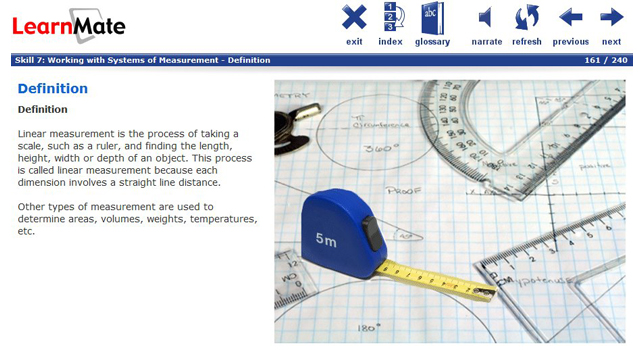 Maintenance Technicians use mathematics as an integral part of their everyday activities such as installing, maintaining, and troubleshooting equipment. Through virtual activities, Math for Technicians 1 delivers the mathematics and physics skills needed for working with materials, maintaining machinery and creating equipment layouts. (Course 1 of 16 for the MSSC CPT Prep Training)
Includes License for 12 months of online course access!
$85
Course Outline
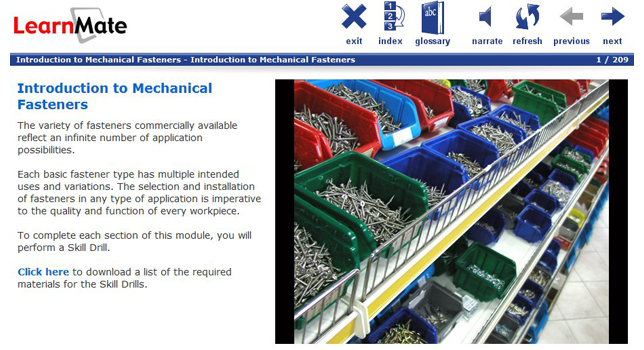 The Mechanical Fasteners course includes twelve activities allowing students to identify and work with many types of fasteners used in engineering and industrial environments. (Course 2 of 16 for the MSSC CPT Prep Training)
Includes License for 12 months of online course access!
$85
Course Outline
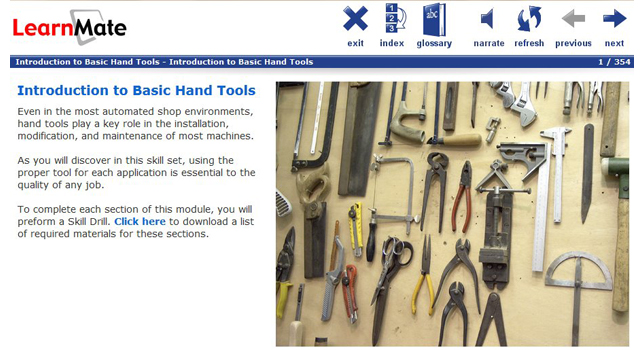 Hand tools play a key role in the everyday tasks of engineers, electrical technicians and other skilled professionals. Hand Tools features skills-based curriculum delivered through seventeen activities in which students learn all aspects of using hand tools. (Course 3 of 16 for the MSSC CPT Prep Training)
Includes License for 12 months of online course access!
Course Outline
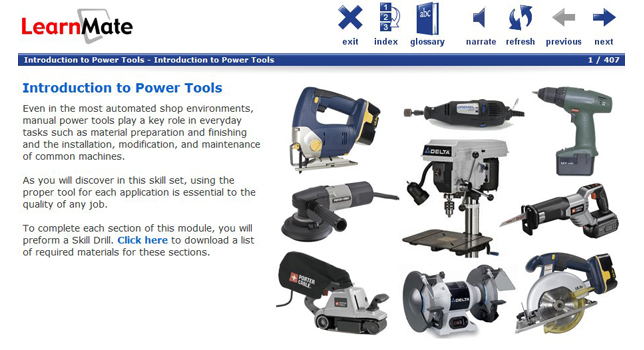 Power tools play a key role in the everyday tasks of engineers, electrical technicians and other skilled professionals. Power Tools delivers twelve skills-based activities, in which students learn all aspects of using power tools. (Course 4 of 16 for the MSSC CPT Prep Training)
Includes License for 12 months of online course access!
Course Outline
 The Safety Fundamentals course introduces students to
important safety fundamentals regarding regulations, policies, equipment,
procedures, training and much more. After providing information
on safety, the course then covers training, production team member roles,
product development and customer service. (Course 5 of 16 for the MSSC CPT Prep Training)
The Safety Fundamentals course introduces students to
important safety fundamentals regarding regulations, policies, equipment,
procedures, training and much more. After providing information
on safety, the course then covers training, production team member roles,
product development and customer service. (Course 5 of 16 for the MSSC CPT Prep Training)
Includes License for 12 months of online course access!
Course Outline
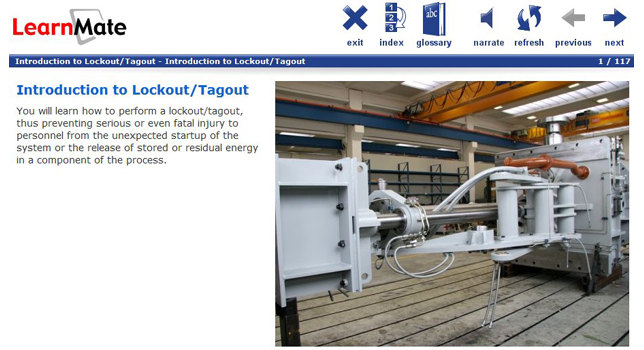 Lockout/tagout procedures are critical in creating a safe work environment. Through interactive activities, students learn all aspects of lockout/tagout procedures in industrial environments. (Course 6 of 16 for the MSSC CPT Prep Training)
Includes License for 12 months of online course access!
Course Outline
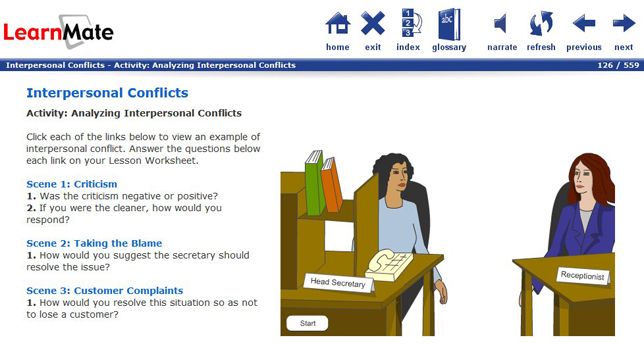 The Employability course was developed in conjunction with SkillsUSA to prepare high school and college students with the skills required to apply for, and succeed in their first job. The course covers job application topics such as setting career goals, résumé preparation and interview skills. (Course 7 of 16 for the MSSC CPT Prep Training)
Includes License for 12 months of online course access!
Course Outline
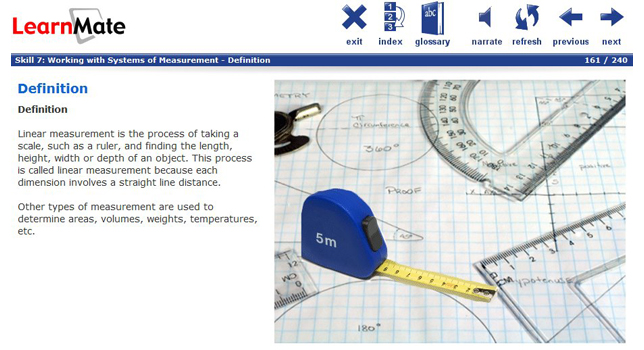 Mathematics for Technicians 2 applies advanced mathematics concepts to everyday tasks. Through interactive activities students learn about drive ratios, Ohm’s Law, mechanical principles, and how these concepts apply in the engineering and industrial environments. (Course 8 of 16 for the MSSC CPT Prep Training)
Includes License for 12 months of online course access!
Course Outline
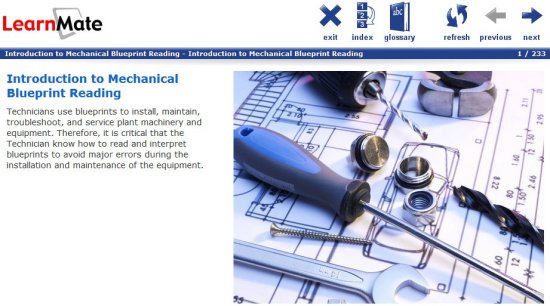 Blueprint Reading delivers skills-based curriculum through virtual activities. Students learn all aspects of reading and interpreting blueprints in engineering and industrial environments, including views, tolerances, cutting planes, thread dimensions, and welding symbols. (Course 9 of 16 for the MSSC CPT Prep Training)
Includes License for 12 months of online course access!
Course Outline
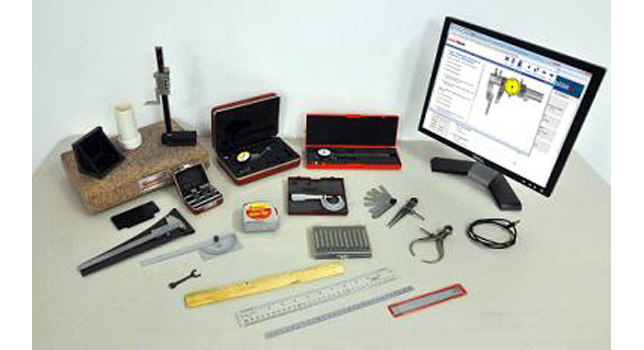 The Mechanical Measurement and Quality Control module enables students to gain a solid foundation of knowledge and skill in performing measurements and calculations. The student learns to use precision measurement tools, such as steel rule, tape measure, protractor, micrometer, height gauge, various calipers and dial indicators. (Course 10 of 16 for the MSSC CPT Prep Training)
Includes License for 12 months of online course access!
Course Outline
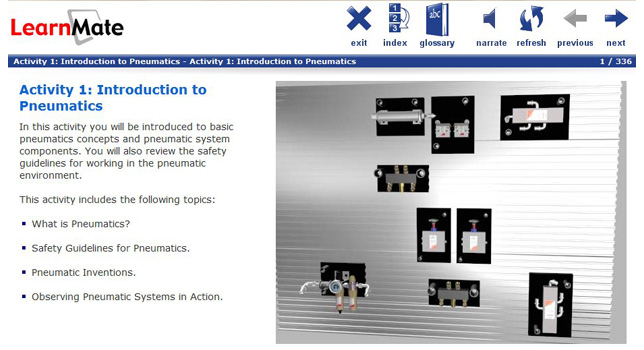 The Pneumatics Technology 1 module introduces the principles of pneumatics and pneumatically controlled systems commonly used in automated manufacturing environments. This module features pneumatic simulation software that allows you to create, modify, operate and observe simulated industrial grade pneumatic and electro-pneumatic devices and circuits. (Course 11 of 16 for the MSSC CPT Prep Training)
Includes License for 12 months of online course access!
Course Outline
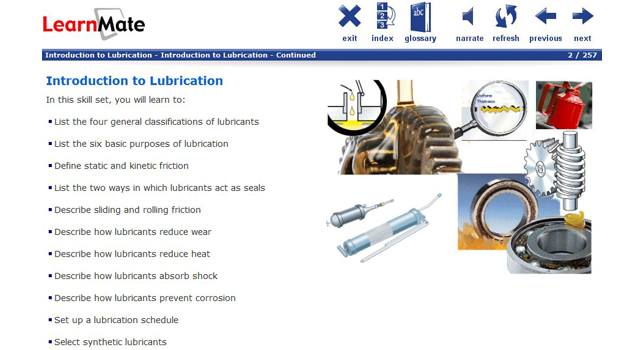 Lubrication for Technicians conveys skills-based curriculum through virtual and hands-on activities. Students learn about lubrication equipment, application methods lubrication schedules, special purpose greases, synthetic lubricants, packing bearings and more. (Course 12 of 16 for the MSSC CPT Prep Training)
Includes License for 12 months of online course access!
Course Outline
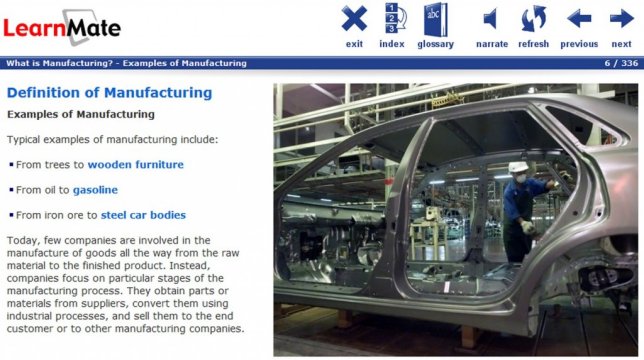 Introduction to Advanced Manufacturing introduces the student to the manufacturing industry and its associated career paths. Students learn about careers offered in manufacturing and about how to prepare for and then pursue those careers. (Course 13 of 16 for the MSSC CPT Prep Training)
Includes License for 12 months of online course access!
Course Outline
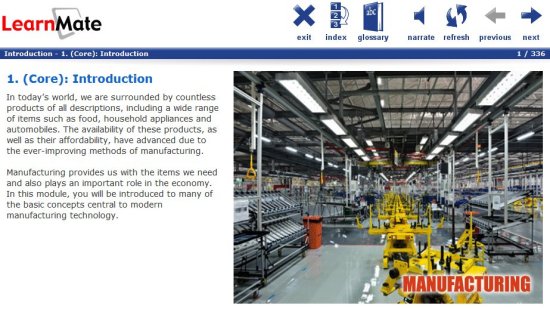 This course explores the principles and techniques involved in Lean Manufacturing including minimizing waste in production and improving work flow in industrial processes. (Course 14 of 16 for the MSSC CPT Prep Training)
Includes License for 12 months of online course access!
Course Outline
 The Flexible Manufacturing System (FMS) module exposes students to automation and industrial applications by combining CNC technology with robotics and materials handling. Students gain "virtual hands-on" experience in CNC and robot programming, especially in I/O commands. (Course 15 of 16 for the MSSC CPT Prep Training)
Includes License for 12 months of online course access!
Course Outline
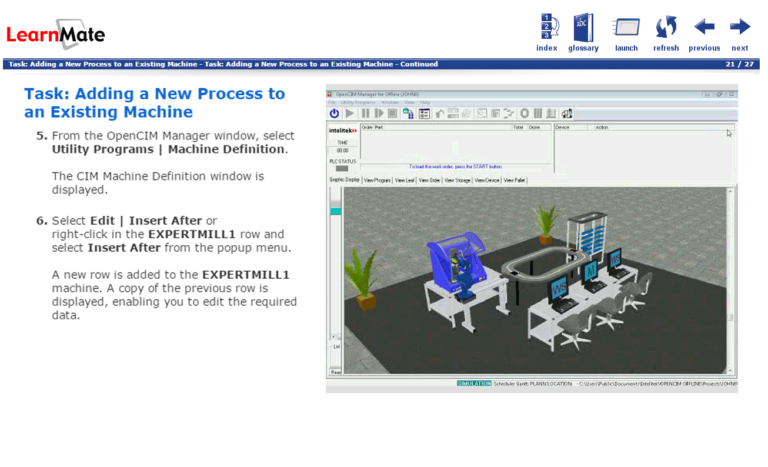 The Computer Integrated Manufacturing 1 module introduces the basic concepts, procedures, and key stages of CIM production as well as the main components and devices in a basic CIM cell. (Course 16 of 16 for the MSSC CPT Prep Training)
Includes License for 12 months of online course access!
Course Outline
 In the Introduction to Industrial Design course, students redesign a simple office supply product, learn and practice technical drawing techniques, and are introduced to how products are made. They explore what reverse engineering is, the importance of patents, as well as rapid prototyping. They will also use 3D design software to complete several projects.
Includes License for 12 months of online access!
Course Outline
 The Engineering Application Series (EAS) provides students the opportunity to master critical academic, workplace, and life skills while solving real-world challenges. Students solve problems by navigating the design loop process using a unique "Challenge Script” and a variety of worksheets.
Includes License for 12 months of online access!
Course Outline
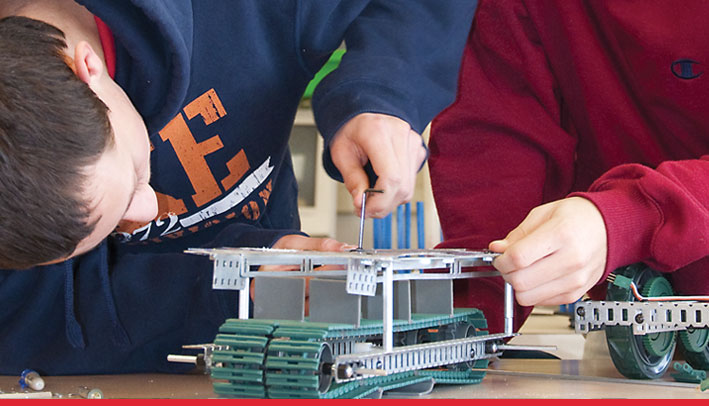 Introduction to Engineering provides students an excellent overview of the field of engineering. This 20-hour course engages students with topics such as an overview of the history of engineering, career choices and the engineering design process. Multi-level hands-on activities involve product design, career seeking and ethics. To conclude the course, a capstone project challenges students to explore engineering.
Includes License for 12 months of online course access!
Course Outline
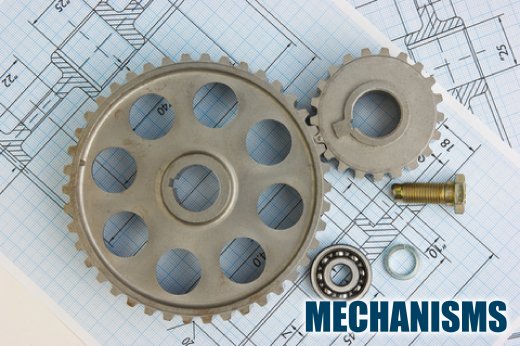 In the Mechanisms course, students examine various components of mechanisms including gears, pulleys, levers, and more. They create several of these simple machines to observe their operation first-hand. The course also instructs students on the calculation of mechanical advantage, force, friction, work, and other measurements associated with mechanisms.
Includes License for 12 months of online course access!
Course Outline